
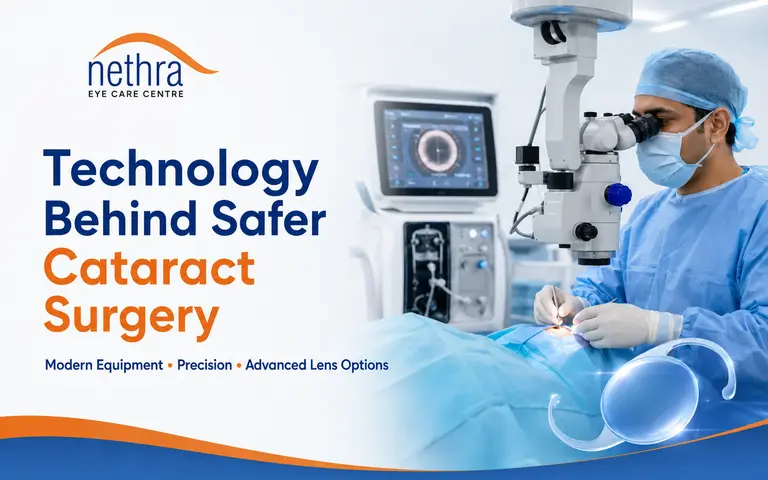
Advanced Technology Behind Safe Cataract Surgery
Modern cataract surgery combines detailed eye measurements, small-incision surgical techniques, precise lens calculations and carefully planned postoperative care. These developments can make the procedure more predictable and comfortable while supporting clearer vision after surgery.
However, technology alone does not determine the outcome. The surgeon’s experience, accurate diagnosis, appropriate intraocular lens selection, sterile surgical protocols and patient follow-up are equally important. When comparing options for the Best Cataract Surgery in Thrissur, patients should consider the complete treatment pathway rather than focusing on a single machine or lens.
What Is a Cataract?
A cataract occurs when the normally clear natural lens inside the eye becomes cloudy. This clouding prevents light from focusing properly on the retina and can gradually affect vision.
Common cataract symptoms include:
Blurred, cloudy or foggy vision
Increased glare from sunlight or headlights
Halos around lights
Difficulty seeing or driving at night
Colours appearing dull or faded
Frequent changes in spectacle power
Needing brighter light while reading
Double vision in one eye
Early cataracts may sometimes be managed temporarily with updated spectacles and improved lighting. When the cataract begins to interfere with reading, driving, work or other everyday activities, surgery may be recommended.
Cataract surgery removes the cloudy natural lens and replaces it with a clear artificial intraocular lens, commonly called an IOL.
How Does Technology Support Modern Cataract Surgery?
Advanced technology supports cataract care at several stages. It helps the surgeon assess the eye before surgery, calculate the required lens power, perform the procedure with precision and monitor healing afterwards.
The main technological components include:
Advanced diagnostic imaging
Optical biometry and lens-power calculation
Modern phacoemulsification systems
Surgical microscopes
Small-incision instruments
Different intraocular lens technologies
Sterile operation-theatre systems
Postoperative examination and monitoring
The Best Cataract Surgery in Thrissur should involve a personalised combination of these technologies based on the patient’s eye health, lifestyle and visual requirements.
Why Are Preoperative Eye Tests Important?
Safe cataract treatment begins before the patient enters the operation theatre. A detailed evaluation allows the ophthalmologist to confirm that the cataract is responsible for the vision problem and identify any other condition that could affect the result.
The assessment may include:
Visual Acuity Testing
This test measures how clearly the patient can see at different distances. It helps document the level of vision affected by the cataract.
Slit-Lamp Examination
A slit lamp provides a magnified view of the front structures of the eye. The ophthalmologist can examine the cornea, iris and natural lens and assess the type and severity of the cataract.
Eye-Pressure Measurement
Checking intraocular pressure helps identify glaucoma or pressure-related concerns that may need to be considered during treatment planning.
Dilated Retinal Examination
The pupil may be dilated to allow the doctor to examine the retina and optic nerve. Retinal disease, diabetic eye changes or glaucoma can affect the expected visual outcome even after a cataract is removed.
Optical Biometry
Optical biometry measures the length and curvature of the eye. These measurements are used to calculate the power of the intraocular lens required after cataract removal.
Corneal and Retinal Imaging
Corneal topography, optical coherence tomography or other imaging may be recommended when the ophthalmologist suspects corneal irregularity, macular disease or another condition requiring closer assessment.
Accurate measurements reduce uncertainty, but no calculation can guarantee complete freedom from spectacles. The final result can also depend on healing, the condition of the retina and optic nerve, and pre-existing refractive errors.
CTA: Experiencing cloudy vision or glare? Schedule a detailed cataract evaluation before the symptoms begin affecting your independence.
What Is Phacoemulsification Surgery?
Phacoemulsification surgery, commonly called PHACO, is a widely used modern technique for removing cataracts. During the procedure, the surgeon makes a small incision and uses a thin probe that delivers ultrasound energy to break the cloudy lens into small fragments. These fragments are then gently removed, and an artificial lens is placed inside the eye.
Phacoemulsification is the most commonly used cataract-removal method and is generally performed through a small incision.
Potential benefits of a small-incision technique can include:
Reduced disturbance to the surrounding eye structures
A smaller surgical wound
Limited or no need for stitches in many cases
Faster initial visual recovery for suitable patients
Earlier return to several routine activities
Greater control during lens removal
The most appropriate surgical method depends on the hardness of the cataract, the condition of the cornea, the strength of the lens-supporting structures and the patient’s overall eye health.
Although PHACO is suitable for many patients, it is not automatically the right method for every cataract. Manual small-incision cataract surgery or another technique may be recommended in certain complex or advanced cases. Nethra Eye Care lists PHACO and manual small-incision cataract surgery among its cataract treatment approaches.
How Does Modern Equipment Improve Surgical Precision?
Eye surgery involves extremely small and delicate structures. Modern equipment allows the surgeon to view these structures clearly and control different stages of the procedure carefully.
Surgical Microscopes
A surgical microscope provides magnification and illumination of the eye. It helps the surgeon visualise the incision, lens capsule and other structures during the procedure.
Controlled Ultrasound Energy
Modern phacoemulsification systems allow the surgeon to adjust the ultrasound energy used to break the cataract. The settings can be modified according to the density of the cloudy lens and the condition of the eye.
Fluid-Control Systems
During phacoemulsification, fluid enters and leaves the eye through the surgical system. Controlled fluid movement helps maintain the space and stability required to perform the procedure.
Small-Incision Instruments
Specialised instruments allow the surgeon to work through a small opening. The incision is designed to support controlled access and secure healing.
Lens-Delivery Systems
Foldable intraocular lenses can be inserted through a small incision using a lens-delivery device. Once inside the eye, the lens unfolds and is positioned within the natural lens capsule.
These technologies assist the surgeon, but they do not replace clinical judgement. The surgeon must decide how to adjust the procedure based on the patient’s anatomy and what is observed during surgery.
What Safety Measures Matter During Cataract Surgery?
Modern equipment is only one part of surgical safety. A reliable cataract programme should also follow clear clinical and infection-control processes.
Important safety measures may include:
Confirming the correct patient and eye before surgery
Reviewing medical conditions and current medicines
Checking allergies and previous eye procedures
Verifying the selected intraocular lens
Maintaining sterile instruments and operation-theatre practices
Monitoring the patient during the procedure
Providing clear instructions about prescribed eye drops
Scheduling appropriate postoperative examinations
Patients with diabetes, glaucoma, corneal disease, retinal disorders, previous eye injuries or a history of eye surgery may require additional planning.
Cataract surgery is widely performed, but no operation is completely free from risk. Possible complications can include infection, inflammation, bleeding, changes in eye pressure, retinal problems, corneal swelling, lens-position concerns or the need for additional treatment. Your ophthalmologist should explain the relevant risks based on your individual eye condition.
How Is the Right Intraocular Lens Selected?
The artificial lens placed during cataract surgery plays an important role in postoperative vision. Lens selection should be based on detailed measurements and a realistic discussion about the patient’s daily activities.
Common IOL categories include:
Monofocal Lenses
A monofocal IOL generally provides a single primary point of focus, often chosen for distance vision. Reading glasses may still be required for near activities.
Toric Lenses
A toric IOL is designed to correct certain levels of corneal astigmatism. Accurate preoperative measurements and proper lens positioning are important for an effective result.
Multifocal Lenses
Multifocal lenses divide light into more than one focal range to reduce dependence on spectacles for selected activities. Some patients may notice glare, halos or reduced contrast, particularly in low-light conditions.
Extended-Depth-of-Focus Lenses
Extended-depth-of-focus lenses aim to provide a continuous range of functional vision, particularly from distance to intermediate tasks. Reading glasses may still be needed for fine near work.
The term “premium cataract surgery” is often used when advanced IOLs or additional technology are involved. However, the most expensive lens is not necessarily the most suitable lens.
The ophthalmologist should consider:
The health of the cornea and retina
The presence of glaucoma
The amount of astigmatism
Pupil characteristics
Driving requirements
Reading and computer habits
Previous refractive surgery
Willingness to use spectacles
Expectations about night vision
Patients should understand both the benefits and limitations of each option before making a decision.
CTA: Unsure which cataract lens suits your lifestyle? Discuss your reading, driving and screen-use needs during a personalised lens consultation.
What Happens on the Day of Cataract Surgery?
Cataract surgery is commonly performed under local anaesthesia, often using numbing eye drops or medication around the eye. The patient is usually awake but should not feel sharp pain during the procedure.
The eye and surrounding area are cleaned, and a sterile covering is placed. The surgeon removes the cloudy lens using the planned technique and inserts the selected IOL. After the procedure, a protective shield may be placed over the eye.
The exact process and time involved can vary depending on the cataract, the selected technique and the patient’s medical needs. Patients should arrange for someone to accompany them home and should not drive immediately after surgery.
What Is Recovery Like After Modern Cataract Surgery?
Many patients notice an improvement in vision within the first few days, but complete healing may take several weeks.
Mild watering, irritation, light sensitivity or temporary blurring may occur during the early recovery period. Patients should use prescribed eye drops exactly as instructed and attend all follow-up appointments.
General precautions may include:
Avoid rubbing or pressing the operated eye
Use the protective eye shield as advised
Keep soap, dust and contaminated water away from the eye
Avoid strenuous activity until the surgeon permits it
Do not restart driving until vision has been assessed
Attend scheduled postoperative examinations
Report unusual symptoms without delay
Seek urgent medical attention for severe pain, sudden reduction of vision, increasing redness, flashes, new floaters, a curtain-like shadow or significant discharge. These are not symptoms to manage at home.
Why Consider Nethra Eye Care for Cataract Surgery?
Nethra Eye Care Centre offers cataract assessment and surgical services in the Thrissur district. Its cataract page includes phacoemulsification and manual small-incision cataract surgery among the available treatment approaches. The hospital also describes advanced diagnostic and surgical technology, operation-theatre facilities, counselling, inpatient care and postoperative support.
Dr. Bastin V A, Medical Director, is listed as a specialist in cataract and refractive surgery. Nethra also has ophthalmologists working across cornea, retina, paediatric ophthalmology, squint and oculoplasty services. This multidisciplinary support can be valuable when a patient has more than one eye condition.
Patients considering the Best Cataract Surgery in Thrissur can visit Nethra Eye Care centres in Irinjalakuda, Kodungallur or Mala for an evaluation. The treatment recommendation will depend on examination findings, eye measurements, health history and personal visual needs.
How Should You Choose a Cataract Surgery Centre?
Before selecting a hospital or surgical plan, ask the following questions:
Who will perform my cataract surgery?
Which surgical method is recommended for my eye?
Why is a particular intraocular lens being suggested?
Will I still need spectacles after surgery?
Do I have glaucoma, retinal disease or corneal problems?
What are the benefits, limitations and risks?
What does the treatment cost include?
How many follow-up appointments will I need?
Whom should I contact if urgent symptoms develop?
The Best Cataract Surgery in Thrissur is not defined by a single claim, machine or lens. It is a treatment plan built around accurate diagnosis, suitable technology, an experienced surgical team, transparent counselling and dependable follow-up care.
Frequently Asked Questions
Is modern cataract surgery completely painless?
Numbing medicine is used to minimise discomfort. Patients may notice light, movement or mild pressure during the procedure, but experiences can vary. Tell the surgical team immediately if you feel significant discomfort.
Does everyone need a premium cataract lens?
No. A premium IOL may benefit selected patients, but it is not suitable for every eye or lifestyle. A well-selected monofocal lens can also provide good functional vision. The decision should follow detailed testing and counselling.
Can cataracts return after surgery?
The removed natural lens cannot develop another cataract. However, the capsule supporting the artificial lens can become cloudy later. This condition, called posterior capsule opacification, can usually be treated with a short laser procedure when clinically appropriate.
Will I be free from spectacles after cataract surgery?
Not necessarily. Spectacle dependence depends on the selected IOL, astigmatism, healing and the health of the eye. Some patients may need glasses for reading, distance vision or specific tasks after surgery.
When should I consider cataract surgery?
Surgery may be considered when a cataract begins to interfere with reading, driving, work, mobility or other important activities. Your ophthalmologist can assess whether the expected benefits outweigh the individual risks.
Conclusion
Advanced diagnostics, phacoemulsification, precise IOL calculations and modern lens options have strengthened today’s cataract treatment pathway. However, safe and effective care still depends on proper patient selection, an experienced surgeon, sterile clinical practices and responsible follow-up.
If cloudy vision, glare or poor night vision is affecting your daily life, consult Nethra Eye Care Centre to explore the Best Cataract Surgery in Thrissur for your individual needs.
CTA: Take the next step towards clearer vision. Book your cataract evaluation at Nethra Eye Care Centre today.

 Call
Now
Call
Now

