
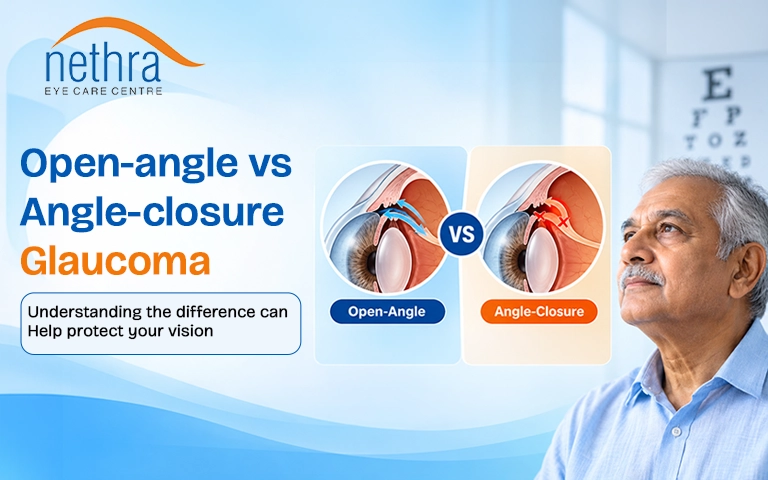
Open-Angle vs Angle-Closure Glaucoma: How Does Treatment Differ?
Glaucoma is a group of eye conditions that can damage the optic nerve and cause permanent vision loss if it is not detected and managed appropriately. However, not all types of glaucoma behave in the same way.
Two important forms are open-angle glaucoma and angle-closure glaucoma. Although both can involve increased pressure inside the eye, the way they develop, the symptoms they produce and the urgency of treatment can be different.
Understanding these differences is important if you or someone in your family has been diagnosed with glaucoma. If you are looking for Glaucoma Treatment in Thrissur, a detailed examination by an ophthalmologist can help identify the type of glaucoma and guide appropriate treatment.
What Is Open-Angle Glaucoma?
Open-angle glaucoma is the most common form of glaucoma. In this condition, the drainage angle of the eye remains open, but fluid does not drain as efficiently as it should.
As fluid drainage becomes less effective, pressure inside the eye may increase. Over time, this can damage the optic nerve.
One of the challenges with open-angle glaucoma is that it can develop gradually without noticeable symptoms.
Peripheral vision may slowly become affected, but many people do not realise there is a problem until the disease has progressed.
What Is Angle-Closure Glaucoma?
Angle-closure glaucoma occurs when the drainage angle becomes narrowed or blocked.
This can cause a rapid rise in eye pressure in some cases. Acute angle-closure glaucoma is an eye emergency and requires immediate medical attention.
Symptoms may include:
Severe eye pain
Sudden blurred vision
Redness of the eye
Halos around lights
Severe headache
Nausea or vomiting
Anyone experiencing these symptoms should seek urgent medical evaluation rather than waiting for them to settle.
How Are the Two Types Different?
The key difference involves how fluid drains from the eye.
| Feature | Open-Angle Glaucoma | Angle-Closure Glaucoma |
|---|---|---|
| Drainage angle | Remains open | Becomes narrow or closes |
| Progression | Often gradual | Can sometimes develop suddenly |
| Early symptoms | Often few or none | Acute attacks can cause significant symptoms |
| Treatment urgency | Usually managed over time | Acute attacks require immediate treatment |
| Monitoring | Regular long-term monitoring | Regular assessment and treatment based on risk |
The exact diagnosis requires an eye examination because symptoms alone cannot reliably determine the type of glaucoma.
How Is Open-Angle Glaucoma Treated?
Treatment for open-angle glaucoma focuses on lowering eye pressure and protecting the optic nerve from further damage.
Glaucoma Eye Drops
Prescription eye drops are commonly used to reduce eye pressure. Depending on the medication, they may decrease fluid production or improve drainage.
Using the drops exactly as prescribed is important because glaucoma treatment is usually long term.
Laser Treatment
Laser procedures may be recommended for some patients when medication alone is not sufficient or when laser treatment is considered appropriate for their condition.
Surgery
If eye pressure remains inadequately controlled despite other treatments, glaucoma surgery may be considered.
The choice depends on the severity of glaucoma, optic nerve damage and response to previous treatment.
How Is Angle-Closure Glaucoma Treated?
Treatment depends on whether the angle closure is acute, intermittent or chronic.
An acute attack can cause a rapid increase in eye pressure and requires urgent treatment to lower the pressure.
Once the immediate pressure problem is addressed, the ophthalmologist may recommend a laser procedure such as laser peripheral iridotomy to help improve the pathway for fluid movement and reduce the risk of further angle closure.
In some patients, lens-related treatment or other procedures may also be considered depending on the anatomy and condition of the eye.
Why Is Early Diagnosis Important?
Glaucoma damage to the optic nerve can be permanent. Treatment aims to slow or prevent further damage rather than restore vision that has already been lost.
This is particularly important with open-angle glaucoma because significant damage can occur before a person notices symptoms.
Regular glaucoma examinations may include:
Eye pressure measurement
Optic nerve examination
Visual field testing
Gonioscopy to assess the drainage angle
OCT or other imaging when required
These tests help the ophthalmologist monitor the condition over time.
Can Glaucoma Be Treated Successfully?
There is currently no single treatment that permanently cures all forms of glaucoma. However, appropriate treatment and regular monitoring can help control eye pressure and reduce the risk of further optic nerve damage.
The treatment plan may change over time depending on how the eyes respond.
This is why glaucoma care involves more than simply checking eye pressure once. Long-term follow-up is an important part of protecting remaining vision.
When Should You Seek Emergency Eye Care?
If you suddenly develop severe eye pain, redness, blurred vision, halos around lights, headache or nausea, do not wait for a routine appointment.
These symptoms can occur with acute angle-closure glaucoma and require urgent assessment.
Similarly, any sudden loss of vision or major change in eyesight should be evaluated promptly.
Who Should Have Regular Glaucoma Screening?
Regular eye examinations are particularly important for people who have risk factors such as:
A family history of glaucoma
Increasing age
Diabetes
Previous eye injury
Certain other eye conditions
Long-term use of certain medications
Your ophthalmologist can recommend an appropriate screening and follow-up schedule based on your individual risk.
Why Choose Nethra Eye Care for Glaucoma Treatment?
Nethra Eye Care provides comprehensive eye evaluation and treatment services, including glaucoma assessment and management.
A detailed examination helps determine the type and severity of glaucoma and whether treatment or continued monitoring is appropriate.
For patients seeking Glaucoma Treatment in Thrissur, professional evaluation and regular follow-up can play an important role in protecting vision over the long term.
Frequently Asked Questions
1. Which is more dangerous, open-angle or angle-closure glaucoma?
Both can threaten vision. Open-angle glaucoma often progresses gradually, while acute angle-closure glaucoma can cause a rapid rise in eye pressure and requires emergency treatment.
2. Can open-angle glaucoma have no symptoms?
Yes. Early open-angle glaucoma may cause little or no noticeable change in vision, which is why regular eye examinations are important.
3. Is angle-closure glaucoma an emergency?
An acute attack of angle-closure glaucoma is an eye emergency. Severe pain, redness, sudden blurred vision, halos, headache or nausea require immediate medical attention.
4. Can glaucoma eye drops cure glaucoma?
Eye drops generally help control eye pressure and reduce the risk of further damage. They do not reverse existing optic nerve damage.
5. How is the type of glaucoma diagnosed?
An ophthalmologist may use eye pressure measurement, optic nerve examination, visual field testing, gonioscopy and imaging such as OCT to evaluate the condition and determine the appropriate treatment approach.
Protect Your Vision With the Right Glaucoma Care
Open-angle and angle-closure glaucoma require different approaches to diagnosis and treatment, making an accurate assessment essential.
If you have glaucoma risk factors, notice changes in your vision or have been advised to undergo glaucoma monitoring, consult an ophthalmologist for a comprehensive evaluation.
For Glaucoma Treatment in Thrissur, Nethra Eye Care can provide assessment, treatment guidance and ongoing monitoring based on your individual eye health.

 Call
Now

