
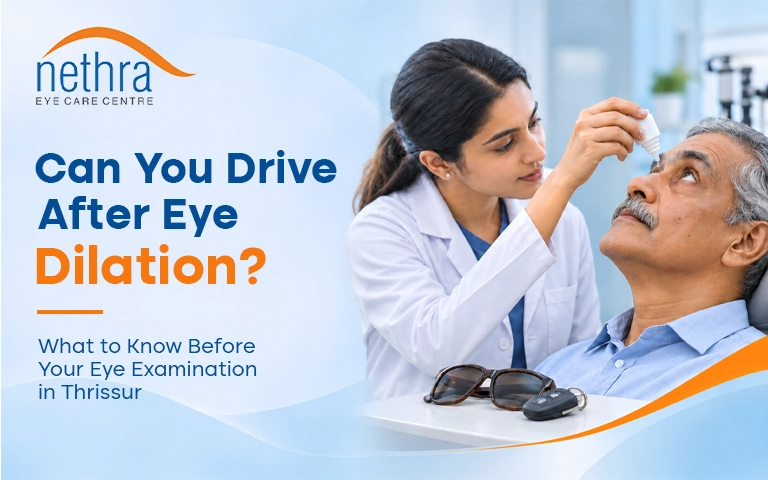
Visiting an Eye Hospital in Thrissur: Can You Drive After Eye Dilation?
If you are visiting an eye hospital for a comprehensive examination, your ophthalmologist may recommend dilating your pupils. This is a routine part of many eye examinations because it allows the doctor to get a better view of the retina, optic nerve and other structures at the back of the eye.
One common question patients have before an appointment is: Can you drive after eye dilation?
The safest approach is to plan your transportation in advance. Dilating eye drops can temporarily cause blurred vision and increased sensitivity to light, which may make driving uncomfortable or unsafe until their effects have worn off. The American Academy of Ophthalmology recommends making arrangements for someone to drive you after dilation when necessary.
If you are planning an examination at an Eye Hospital in Thrissur, knowing what to expect can make your visit more comfortable.
Why Are Your Eyes Dilated During an Eye Examination?
The pupil naturally controls how much light enters the eye. During dilation, special eye drops temporarily make the pupil larger.
This gives the ophthalmologist a wider view of the inside of the eye and can help with the assessment of conditions affecting the retina, optic nerve and other internal structures.
Dilation may be particularly useful when checking for conditions such as:
Diabetic eye disease
Glaucoma-related changes
Retinal conditions
Age-related eye problems
Other abnormalities at the back of the eye
Whether dilation is needed depends on your age, symptoms, medical history and the purpose of the examination.
Can You Drive After Eye Dilation?
It is generally better not to plan to drive yourself home immediately after your pupils have been dilated.
The drops can temporarily cause:
Blurred or hazy vision
Difficulty focusing on nearby objects
Increased sensitivity to bright light
Glare or discomfort outdoors
The effects can last for several hours, although the duration varies depending on the type of drops used and how your eyes respond.
Because you cannot reliably predict how much your vision will be affected, arranging a family member, friend or another form of transportation is a practical precaution.
How Long Does Eye Dilation Last?
There is no single duration that applies to everyone.
The pupils generally take around 20–30 minutes to become fully dilated. After that, blurred vision and light sensitivity can continue for a few hours. Some people recover sooner, while others may experience the effects for longer. Children and younger patients can sometimes remain dilated for longer periods.
Your ophthalmologist can give you more specific advice based on the drops used during your examination.
Do Sunglasses Help After Eye Dilation?
Yes. Sunglasses can make you more comfortable because dilated pupils allow more light to enter the eye.
This can make bright outdoor conditions feel uncomfortable. Carrying sunglasses when visiting an eye hospital is therefore a simple way to prepare for your appointment.
However, sunglasses do not remove the temporary blurring or focusing difficulty caused by dilation. They mainly help reduce light sensitivity and glare.
What Should You Do Before Visiting an Eye Hospital in Thrissur?
If you think your pupils may need to be dilated, a little preparation can make your appointment easier.
Before your visit:
Carry your current spectacles.
Bring previous eye-test reports if available.
Keep a list of your current medicines and eye drops.
Carry sunglasses.
Avoid scheduling an important driving journey immediately after the examination.
Consider arranging someone to accompany you if dilation is likely.
Nethra Eye Care's own appointment guidance also recommends arranging assistance when pupil dilation may be required.
For more preparation tips, you can read Book an Eye Consultation at Nethra Eye Care in Thrissur Today.
Does Every Eye Examination Require Dilation?
No. Dilation is not necessarily required for every appointment.
Your ophthalmologist decides whether dilation is appropriate based on the reason for your visit, your age, medical history, symptoms and risk factors.
A comprehensive eye examination may involve several other tests, including vision testing, eye pressure measurement and examination of the front and back of the eye.
If you want to understand why routine examinations matter even when your vision seems normal, see Why Regular Eye Check-ups Are Essential for Healthy Vision.
Can You Work or Use a Phone After Eye Dilation?
You may be able to use a phone, read or work after dilation, but close-up vision can temporarily become uncomfortable or blurry.
If your work involves prolonged computer use or detailed near vision, it may be more comfortable to schedule the examination when you have some flexibility afterward.
The effect varies between individuals, so listen to your ophthalmologist's advice and allow your eyes time to recover.
When Should You Contact an Eye Specialist After Dilation?
Temporary blurred vision and light sensitivity are expected effects of dilation.
However, if you experience unusual or severe symptoms such as significant eye pain, worsening vision, severe headache, nausea or other concerning changes after dilation, contact an eye-care professional promptly.
These symptoms should not simply be assumed to be normal effects of the drops.
Why Is a Dilated Eye Examination Important?
Although dilation can be inconvenient for a few hours, it can provide your ophthalmologist with a much better view of the internal structures of the eye.
This can be particularly important for people with diabetes, glaucoma risk factors, retinal conditions or other eye-health concerns.
Regular eye examinations can help detect problems before they cause noticeable vision changes. Nethra Eye Care provides comprehensive eye evaluation and specialised ophthalmic services, including cataract, glaucoma, retina, cornea and pediatric eye care.
Frequently Asked Questions
1. Can I drive immediately after my eyes are dilated?
It is safer to arrange alternative transportation because dilation can cause temporary blurred vision and light sensitivity. Wait until the effects have completely worn off and your vision is normal before driving.
2. How long will my eyes stay dilated?
The effects usually last for several hours, but the exact duration varies depending on the drops used and your individual response.
3. Should I bring sunglasses to my eye appointment?
Yes. Sunglasses can make you more comfortable outdoors after dilation by reducing glare and light sensitivity.
4. Does everyone need their eyes dilated?
No. Your ophthalmologist will determine whether dilation is appropriate based on your examination and individual risk factors.
5. Can I use my mobile phone after eye dilation?
You may be able to, but close-up vision can temporarily become blurry or difficult to focus. If it feels uncomfortable, give your eyes some rest until the effects wear off.
Plan Ahead for a More Comfortable Eye Examination
Eye dilation is a routine diagnostic step that can help your ophthalmologist examine the back of your eye more thoroughly. The main thing to remember is that your vision may be temporarily blurred and more sensitive to light afterward.
If you are planning a visit to an Eye Hospital in Thrissur, consider arranging transportation in advance, carrying sunglasses and allowing yourself some recovery time after the examination.
For comprehensive eye evaluation and personalised guidance, Nethra Eye Care provides a range of ophthalmic services for patients across Thrissur.

 Call
Now

