
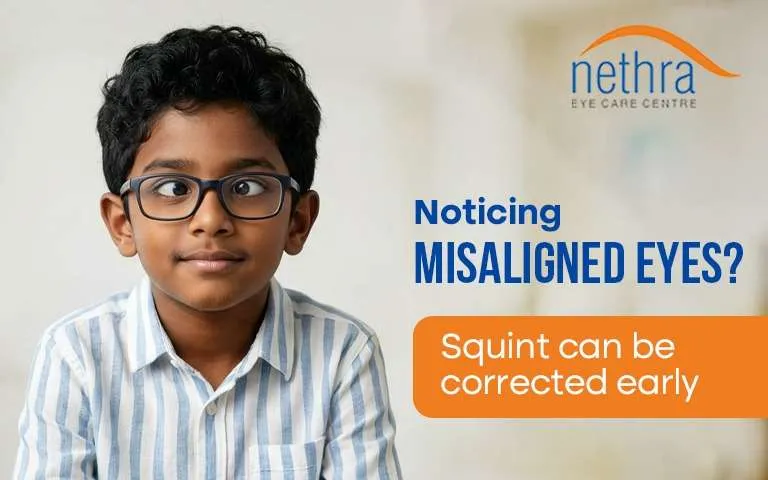
What Causes Squint Eyes and Can It Be Corrected Without Surgery?
Squint eyes, medically known as strabismus, is a condition where both eyes fail to align in the same direction. One eye may focus straight ahead while the other turns inward, outward, upward or downward. This misalignment not only affects appearance but can also interfere with clear vision and depth perception. Many individuals and parents seek expert care at an Eye Hospital Thrissur to understand the root cause and explore effective treatment options. The encouraging part is that squint eyes are treatable and in many cases, they can be corrected without surgical intervention if diagnosed early.
What Are Squint Eyes?
Squint eyes occur when the six muscles controlling each eye do not work in proper coordination. Normally, both eyes move together and focus on the same object, allowing the brain to combine the images into a single clear picture. In squint, this coordination breaks down, leading to:
- Double vision in some cases
- Suppression of one eye’s image by the brain
- Reduced depth perception
- Development of lazy eye (amblyopia) in children
What Causes Squint Eyes?
Squint eyes can develop due to a variety of reasons and identifying the exact cause is essential for effective treatment.
Common causes include:
- Muscle imbalance: One or more eye muscles may be too strong or too weak
- Uncorrected refractive errors: Especially farsightedness (hyperopia), causing the eyes to strain
- Nerve-related issues: Improper signals from the brain to the eye muscles
- Genetic factors: A family history of squint increases risk
- Childhood conditions: Premature birth, low birth weight or developmental delays
- Eye injuries or illnesses: Trauma or infections affecting eye function
A detailed evaluation at an Eye Hospital Thrissur helps determine whether the condition is congenital (present at birth) or acquired later in life.
Can Squint Eyes Be Corrected Without Surgery?
Yes, many cases of squint eyes - especially mild to moderate ones - can be effectively treated without surgery. Non-surgical treatments focus on improving eye coordination and correcting underlying vision problems.
Non-surgical treatment options:
- Prescription glasses or contact lenses
Help correct refractive errors and reduce strain on the eyes - Eye patching (occlusion therapy)
- Covers the stronger eye
- Forces the weaker eye to work harder
- Prevents or treats lazy eye
- Vision therapy (eye exercises)
- Improves eye muscle coordination
- Enhances focusing ability
- Often guided by specialists
- Prism lenses
- Adjust how light enters the eyes
- Help align images seen by both eyes
- Botulinum toxin injections (in selected cases)
- Temporarily relax overactive eye muscles
- Helps improve alignment without surgery
These treatments are particularly effective in children, but adults can also benefit depending on the type and severity of squint.
When Is Surgery Required?
Surgery is considered when non-surgical methods do not produce satisfactory results or when the squint is severe.
Surgery may be recommended if:
- The eye deviation is large and constant
- Vision development is at risk
- There is poor response to glasses or therapy
- Cosmetic concerns significantly affect confidence
Even in such cases, specialists at an Eye Hospital Thrissur carefully evaluate the patient before suggesting surgery, ensuring it is truly necessary.
How Important Is Early Treatment?
Early detection and treatment play a crucial role in successful outcomes, especially in children.
Benefits of early treatment:
- Prevents permanent vision loss (amblyopia)
- Promotes proper binocular vision
- Improves depth perception
- Reduces the need for surgical correction
- Enhances social confidence and quality of life
Parents should seek evaluation if they notice any misalignment, even if it appears occasional.
FAQs
1. Can squint eyes go away on their own?
Some mild cases in infants may resolve naturally, but persistent squint requires medical evaluation and treatment.
2. Are eye exercises really effective?
Yes, especially in cases involving coordination issues. However, they must be done under professional guidance for best results.
3. At what age should squint be treated?
Treatment should begin as early as possible - ideally before the age of 6 - to ensure proper visual development.
4. Is wearing glasses enough to correct squint?
If the squint is caused by refractive errors, glasses alone can significantly improve or even correct the condition.
5. Can adults get treatment for squint eyes?
Absolutely. Adults can benefit from vision therapy, prism glasses, or surgery depending on their condition.
Conclusion
Squint eyes can arise from multiple causes, including muscle imbalance, nerve issues or uncorrected vision problems. The condition is not only manageable but often correctable without surgery when identified early. With advanced diagnostic tools and personalized care available at an Eye Hospital Thrissur, patients can explore effective non-surgical treatments that restore proper alignment and improve vision. Seeking timely medical attention is the key to achieving the best possible outcomes and maintaining long-term eye health.

 Call
Now
Call
Now

