
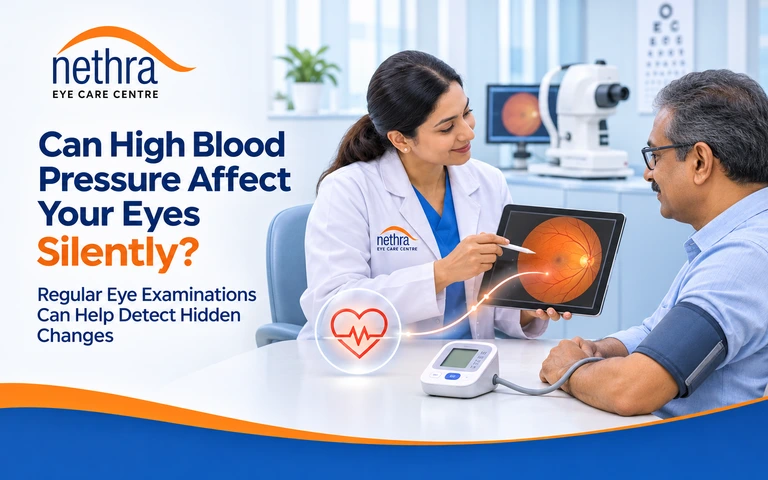
Can High Blood Pressure Affect Your Eyes Without Causing Symptoms?
High blood pressure is commonly associated with the heart, brain and kidneys, but it can also affect the eyes. What makes hypertension-related eye problems particularly concerning is that changes may develop gradually without causing noticeable symptoms in the early stages.
You may have normal-looking vision, continue reading and working as usual, and still have changes occurring in the blood vessels of your retina.
This is why people with high blood pressure should not wait for blurred vision or other symptoms before considering an eye examination. Regular eye check-ups can help an ophthalmologist identify changes early and determine whether further monitoring or treatment is needed.
If you have hypertension or other cardiovascular risk factors, visiting an Eye Hospital in Thrissur for a comprehensive eye examination can be an important part of protecting your long-term vision.
How Can High Blood Pressure Affect the Eyes?
The retina is a light-sensitive layer at the back of the eye that plays an essential role in vision. It contains a network of very small blood vessels that supply oxygen and nutrients to retinal tissue.
When blood pressure remains high over time, it can place stress on these delicate blood vessels.
Long-term hypertension may contribute to:
Narrowing of retinal blood vessels
Changes in blood-vessel walls
Reduced blood flow to retinal tissue
Leakage of blood or fluid
Retinal swelling
Increased risk of retinal vascular problems
These changes are commonly described as hypertensive retinopathy.
Nethra Eye Care has previously published a detailed guide on this topic, How Does High Blood Pressure Affect the Retina and Vision?, which explains the retinal effects of hypertension in greater detail.
Can High Blood Pressure Damage Your Eyes Without Symptoms?
Yes.
One of the important features of hypertension-related eye disease is that early changes may not cause obvious symptoms.
A person may therefore think:
“My vision is clear, so my eyes must be healthy.”
But clear vision does not necessarily mean that the retina and its blood vessels are completely healthy.
An eye examination can allow the ophthalmologist to look for changes that you may not be able to notice yourself.
This is particularly relevant for people who have had high blood pressure for several years or who also have diabetes, high cholesterol, kidney disease or other cardiovascular risk factors.
What Is Hypertensive Retinopathy?
Hypertensive retinopathy refers to changes in the retina associated with high blood pressure.
Depending on the severity and duration of hypertension, an ophthalmologist may identify changes such as:
Narrowed retinal arteries
Changes in the appearance of blood vessels
Small retinal haemorrhages
Areas of reduced blood supply
Retinal swelling
Changes involving the optic nerve in severe cases
The presence and severity of these findings can help the eye specialist understand whether hypertension may be affecting the eye.
Importantly, retinal findings need to be interpreted in the context of your overall health and blood-pressure history.
What Symptoms Can High Blood Pressure Cause in the Eyes?
Early hypertension-related eye changes may have no symptoms. When complications become more significant, however, a person may experience:
Blurred vision
Reduced visual clarity
Difficulty focusing
Visual disturbances
Double vision in some situations
Sudden changes in vision
Sudden or significant vision loss should always be treated as an urgent eye problem rather than assumed to be caused by ordinary blood-pressure fluctuations.
Can High Blood Pressure Cause Permanent Vision Loss?
Severe or uncontrolled hypertension can increase the risk of serious eye complications.
For example, damage to retinal blood vessels can contribute to retinal vein or artery occlusion. Fluid accumulation in the macula can also affect central vision.
In severe cases, blood-pressure-related damage can involve the optic nerve or retina and potentially result in permanent visual impairment.
This is one reason controlling blood pressure and attending appropriate eye examinations are both important.
What Eye Tests Can Detect Hypertension-Related Changes?
A comprehensive eye examination can include several tests depending on your symptoms and risk factors.
Dilated Retina Examination
The pupils may be dilated so the ophthalmologist can examine the retina and its blood vessels in greater detail.
Fundus Photography
Retinal photographs can document the appearance of the blood vessels and provide a baseline for future comparison when required.
OCT Eye Scan
Optical Coherence Tomography (OCT) provides detailed images of the retinal layers. It can help identify swelling or structural changes that may affect vision.
Eye Pressure Measurement
Blood pressure and eye pressure are different measurements, but eye pressure may be checked as part of a comprehensive eye examination, particularly when assessing overall glaucoma risk.
Visual Acuity Testing
A vision test determines how clearly you can see at different distances. However, normal visual acuity alone does not rule out early retinal disease.
Who Should Be More Careful About Their Eye Health?
Anyone with high blood pressure should follow the screening schedule recommended by their doctor.
More frequent monitoring may be appropriate for people who also have:
Diabetes
Kidney disease
High cholesterol
A history of retinal disease
Previous eye problems
A family history of certain eye conditions
Poorly controlled blood pressure
Your ophthalmologist can recommend an examination schedule based on your medical and eye history rather than relying on a single timetable for everyone.
For more information about preventive eye examinations, see Nethra Eye Care's Why Regular Eye Check-ups Are Essential for Healthy Vision.
Does Normal Vision Mean You Can Skip an Eye Check-Up?
No.
This is especially important for conditions that can progress without noticeable symptoms.
Glaucoma is another example. Nethra Eye Care's article Could Glaucoma Be Affecting Your Vision Without You Knowing? explains why glaucoma can gradually damage the optic nerve before a person notices significant changes.
High blood pressure can also coexist with other eye conditions, which is why a comprehensive examination is more useful than checking only one aspect of eye health.
What Can You Do to Protect Your Eyes?
Eye health and overall cardiovascular health are closely connected.
If you have high blood pressure, work with your physician to manage it appropriately.
Helpful steps include:
Monitor your blood pressure as advised
Take prescribed medicines consistently
Follow your doctor's recommendations about diet and exercise
Manage diabetes and cholesterol when applicable
Avoid smoking
Attend recommended medical appointments
Have regular eye examinations
Do not change or stop blood-pressure medication without advice from your treating doctor.
What Does a Patient Experience at Nethra Eye Care?
Patient feedback across Nethra Eye Care's three locations frequently highlights clear explanations, attentive doctors, supportive staff and an organised examination process.
At the Irinjalakuda centre, patients have specifically praised doctors for explaining findings clearly and taking time to answer questions. The Kodungallur reviews similarly highlight a systematic check-up process and clear communication, while feedback from Mala frequently mentions courteous staff, cleanliness and detailed explanations.
For a concern such as hypertension-related eye changes, this emphasis on explaining examination findings can be particularly useful because patients may have no obvious symptoms and may need to understand why follow-up testing is recommended.
When Should You See an Eye Specialist?
If you have high blood pressure, you do not necessarily need to wait until your vision changes before having an eye examination.
You should arrange an eye consultation if you have:
Long-standing hypertension
Difficult-to-control blood pressure
Diabetes along with hypertension
A previous retinal condition
New blurred vision
New visual disturbances
Difficulty seeing clearly
A sudden change in vision
Sudden vision loss, severe eye pain, a new shower of floaters, flashes or a curtain-like shadow across your vision require urgent medical assessment.
If you are unsure which type of examination you need, Nethra Eye Care's Book an Eye Consultation in Thrissur guide explains what patients can expect during a comprehensive consultation.
Frequently Asked Questions
1. Can high blood pressure affect my eyes even if I see clearly?
Yes. Early retinal changes associated with hypertension may not cause noticeable vision symptoms.
2. What is hypertensive retinopathy?
Hypertensive retinopathy refers to changes in the retina and its blood vessels associated with high blood pressure.
3. Is an eye pressure test enough to check whether hypertension has affected my eyes?
No. Eye pressure and blood pressure are different measurements. A retinal examination and other tests may be required to assess hypertension-related eye changes.
4. How often should someone with high blood pressure have an eye examination?
There is no single schedule suitable for everyone. Your ophthalmologist can recommend how frequently you should be examined based on your blood pressure, medical history, age and eye findings.
5. Can controlling blood pressure protect my eyesight?
Good blood-pressure control can help reduce the risk of further blood-vessel damage and related complications. It should be combined with appropriate eye monitoring.
Protect Your Eyes Before Symptoms Appear
High blood pressure can affect the delicate blood vessels of the retina without causing noticeable symptoms in the early stages. That is why waiting for blurred vision before having your eyes examined may not be the best approach.
If you have hypertension, diabetes, cardiovascular risk factors or an existing eye condition, discuss your recommended eye-screening schedule with your healthcare providers.
For comprehensive eye evaluation and retinal assessment, patients looking for an Eye Hospital in Thrissur can consult Nethra Eye Care Centre.

 Call
Now

